
Excellence in Healthy, Strong & Beautiful Nails
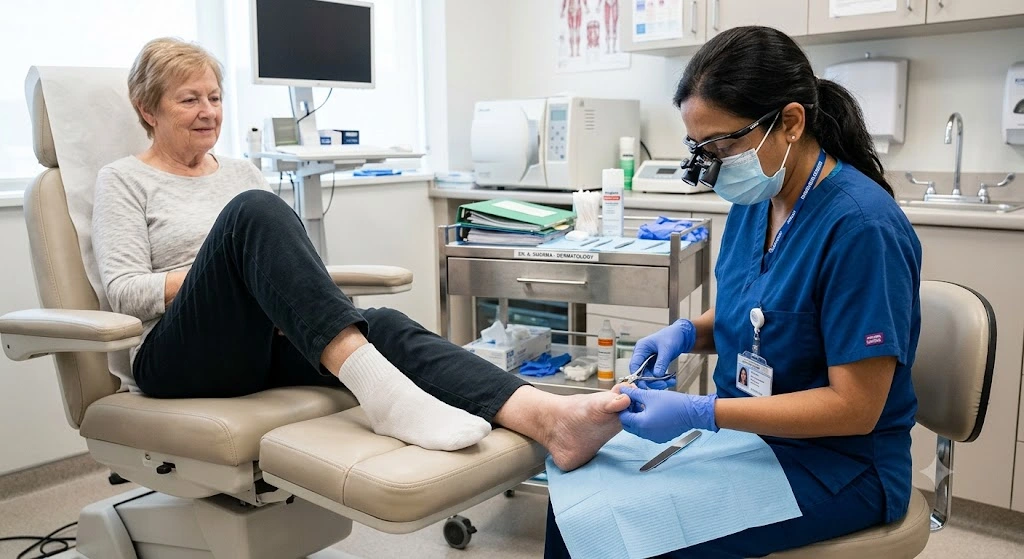
Nail disorders are more common than most people realise, and they affect people of every age group. Nails can be affected by fungal infections, bacterial infections, injury, psoriasis, eczema, or even nutritional deficiencies. Because nails grow slowly, changes in their colour, shape, or texture often go unnoticed in the early stages, allowing the underlying problem to worsen over time.
Some of the most common symptoms our patients come in with include:
- Yellowing, browning, or whitening of the nail plate
- Thickening or crumbling of the nail
- Nails that appear brittle, ridged, or pitted
- Separation of the nail from the nail bed
- Swelling, redness, or pain around the nail (paronychia)
- Foul odour from the affected nail
- Ingrown toenails causing pain and inflammation
- Nails that split, peel, or break easily
- White or dark spots/streaks appearing on the nail surface
- Slow or abnormal nail growth
These symptoms may point towards fungal infections (onychomycosis), bacterial infections, nail psoriasis, nail eczema, trauma-related nail damage, or in rare cases, more serious underlying health conditions. This is precisely why a proper clinical evaluation is so important — self-treating a nail problem with over-the-counter products often masks the symptoms without resolving the actual cause, allowing the condition to return or worsen.
At Acura Skin & ENT Clinic, no two nail treatment plans are the same. Every patient undergoes a thorough clinical examination, and where required, diagnostic tests such as a KOH mount or fungal culture are performed to accurately identify whether the problem is fungal, bacterial, or related to an underlying skin condition. This precise diagnosis allows us to avoid guesswork and offer targeted treatment that works.
Depending on the diagnosis, our treatment approach may include:
- Topical Antifungal & Antibacterial Therapy — Medicated creams, gels, or nail lacquers applied directly to the affected nail to eliminate the infection at the source.
- Oral Antifungal/Antibiotic Medication — Prescribed in cases of deeper or more widespread infection, where topical treatment alone is insufficient.
- Nail Debridement — Careful removal of the thickened, infected, or damaged portion of the nail to allow medication to penetrate more effectively and encourage healthy regrowth.
- Ingrown Nail Correction — Minor in-clinic procedures to relieve pain, remove the offending nail edge, and prevent recurrence.
- Management of Nail Psoriasis & Eczema — Targeted therapy to control the underlying skin condition responsible for nail changes, often combined with skin treatment for long-term relief.
- Lifestyle & Nail Hygiene Guidance — Personalised advice on footwear, nail trimming techniques, moisture control, and hygiene practices to prevent recurrence.
- Nutritional & Systemic Evaluation — Where brittle or abnormal nails suggest a possible deficiency or systemic cause, we guide patients towards the appropriate further evaluation.
Consistency is key in nail treatment, as nails grow slowly and it can take several weeks to months to see complete improvement. Our doctors closely monitor progress at each follow-up visit and adjust the treatment plan as needed to ensure the best possible outcome, while minimising the chances of the infection or condition returning.
Understanding what causes nail problems helps in both effective treatment and long-term prevention. Common causes and contributing factors include:
Causes
- Fungal or bacterial infection of the nail or surrounding skin
- Prolonged exposure to moisture, water, or sweat (common in those who wear closed shoes for long hours)
- Injury or repeated trauma to the nail
- Improper nail trimming or cutting nails too short
- Tight or ill-fitting footwear
- Underlying skin conditions such as psoriasis or eczema
- Frequent use of nail polish, artificial nails, or harsh chemical removers
- Poor nail hygiene or sharing of nail-cutting tools
- Reduced blood circulation, often seen in diabetic patients
- Nutritional deficiencies affecting nail strength and growth
Who Is at Higher Risk
- Individuals with diabetes or a weakened immune system
- People who frequently visit swimming pools, gyms, or public showers barefoot
- Those with a history of skin conditions like psoriasis
- People whose occupation involves prolonged hand/foot moisture exposure
- Elderly individuals, as nail growth slows and circulation reduces with age
- Athletes and individuals wearing tight, non-breathable footwear regularly
Left untreated, nail infections and disorders can spread to other nails, surrounding skin, or in rare cases lead to more serious complications — particularly in diabetic or immunocompromised patients. Early consultation not only speeds up recovery but significantly reduces the risk of the condition recurring or worsening.